
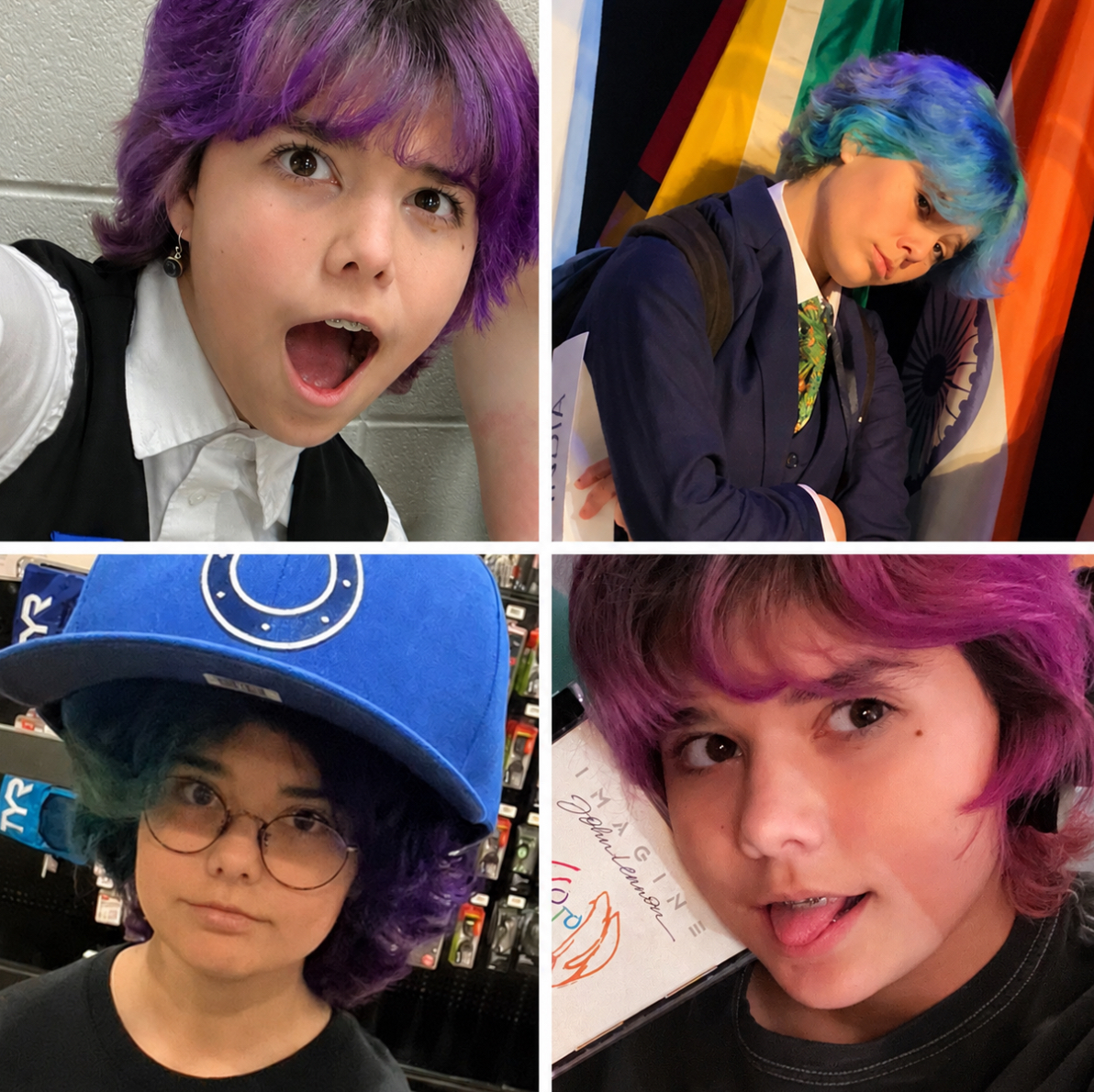
For many students hair is just hair, but for Maya Smith, it has become something much bigger. Through years of changing colors, spontaneous dye jobs and reactions from classmates and strangers alike, Maya has turned self-expression into an art form.
She first began experimenting with hair color during the summer before sixth grade. What started as simple curiosity eventually evolved into a major part of how she expresses herself. Since then, her hair has gone through numerous shades, each tied to different memories and moments in her life. While some colors were carefully chosen, others happened completely on impulse.
“When I first started dying my hair, I was doing it just for fun,” Smith said. “But as I kept doing it, it became a part of me. Sometimes I’ll just be sitting in my room and think, ‘I think I’ll go red now.”
Despite the occasional spontaneity, certain patterns have begun to appear over time. According to Smith, she often notices herself returning to red during periods of academic pressure and stressful life events. One color, however, consistently stands out above the rest: purple. She describes it as almost a “good luck charm,” tied to some of her favorite memories and experiences.
“I always go back to purple,” Smith said. “Purple is the color that I always seem to have in the happiest periods of my life.”
Of course, standing out visually has not always been easy. Smith recalls being judged in middle school after cutting her hair short and dying it bright colors during the pandemic years. She even remembers being barked at by classmates because of her blue hair. But rather than making her stop expressing herself, those experiences changed her perspective.
“Having short, dyed hair in a middle school where boys did not know how to interact with someone like you was not the most pleasant experience,” Smith said. “It really shows how it’s not that hard to just refrain from judging other people. You never know what someone else is going through.”
Over time, the criticism became easier to ignore. Today, she says she no longer feels pressure to justify her appearance to strangers or classmates.
“Most of the people who don’t ‘agree’ with my hair are usually just strangers passing by in a hallway or at the mall,” Smith said. “Because of that, I no longer feel the need to overexplain.”
Smith also acknowledges the stereotypes that often come with unconventional appearance choices. She mentioned being labeled “the blue-haired liberal with pronouns” simply because of her hair color. However, she believes appearance should not automatically define someone’s beliefs or identity.
“When that happens, I remind people that hair color or style has nothing to do with someone’s politics or gender identity,” Smith said. “It’s simply a form of self-expression.”
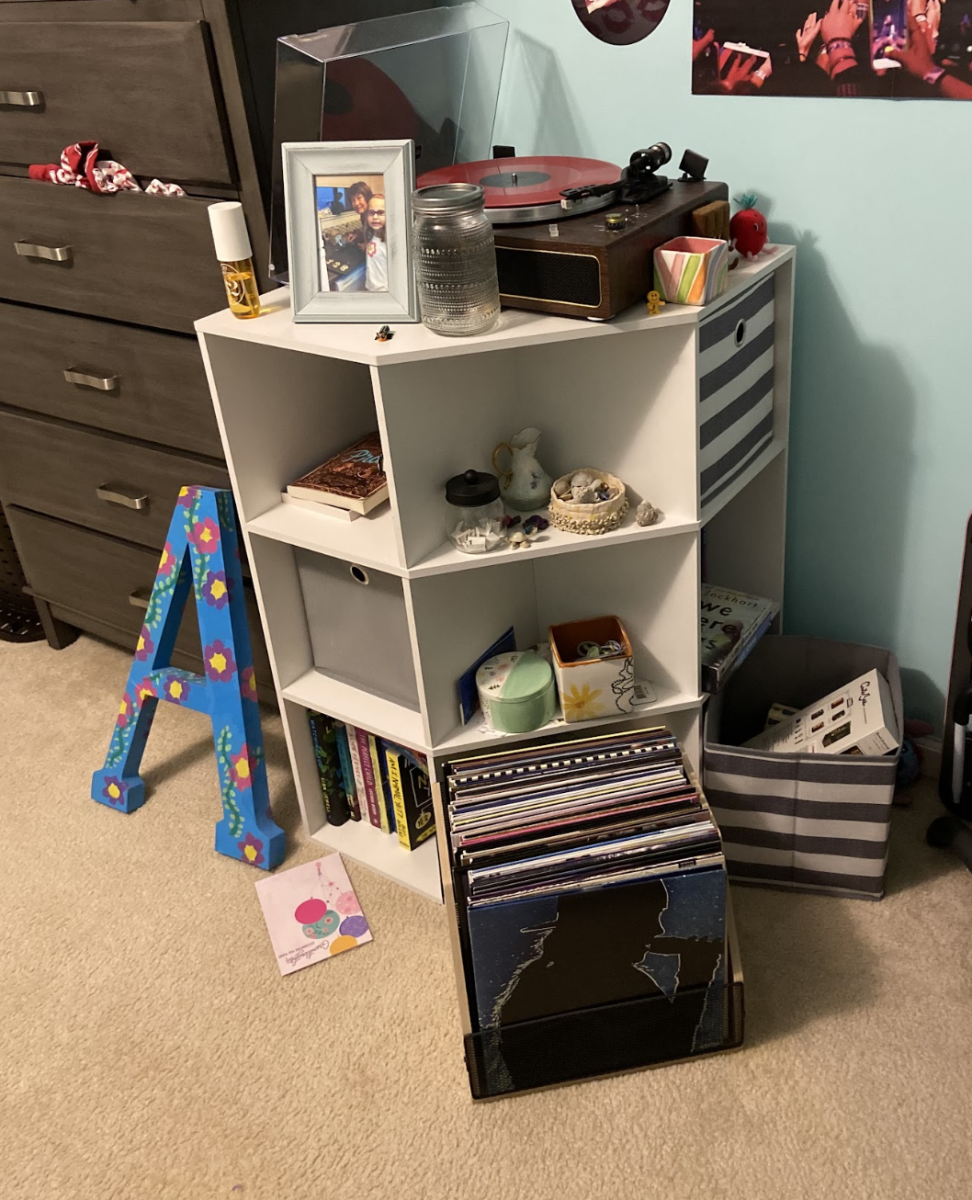
For Smith, self-expression extends far beyond hair. Music, fashion, humor, creativity and personal interests all play a role in shaping identity. A fan of psychedelic aesthetics and a collector of CDs and vinyl records, she joked that her love for The Beatles probably explains many of the unusual colors that appear in her hair.
“My hair and face are just another canvas to be filled with art,” Smith said. “I have learned how much easier it is to stand out than to fit in. It takes an enormous amount of energy just to simply be normal, and I refuse to spend that much energy on something so dull.”
Despite the confidence she has developed, she admits that experimenting with appearance taught her important lessons about individuality. Looking back now, Smith believes every color tells part of her story. Whether it reminds her of stressful school years, friendships, or moments of personal growth, each shade represents a different chapter in her life.
“I finally decided that if I can’t get rid of the weirdness, why not amplify it?” Smith said.
That decision eventually helped her find a community of friends who embraced creativity and individuality alongside her. And in fact Smith has some advice for those afraid of expressing themselves: focus on authenticity over approval.
“I would tell them that self-expression is always going to invite opinions,” she said. “But other people’s judgments shouldn’t decide who you are.”