
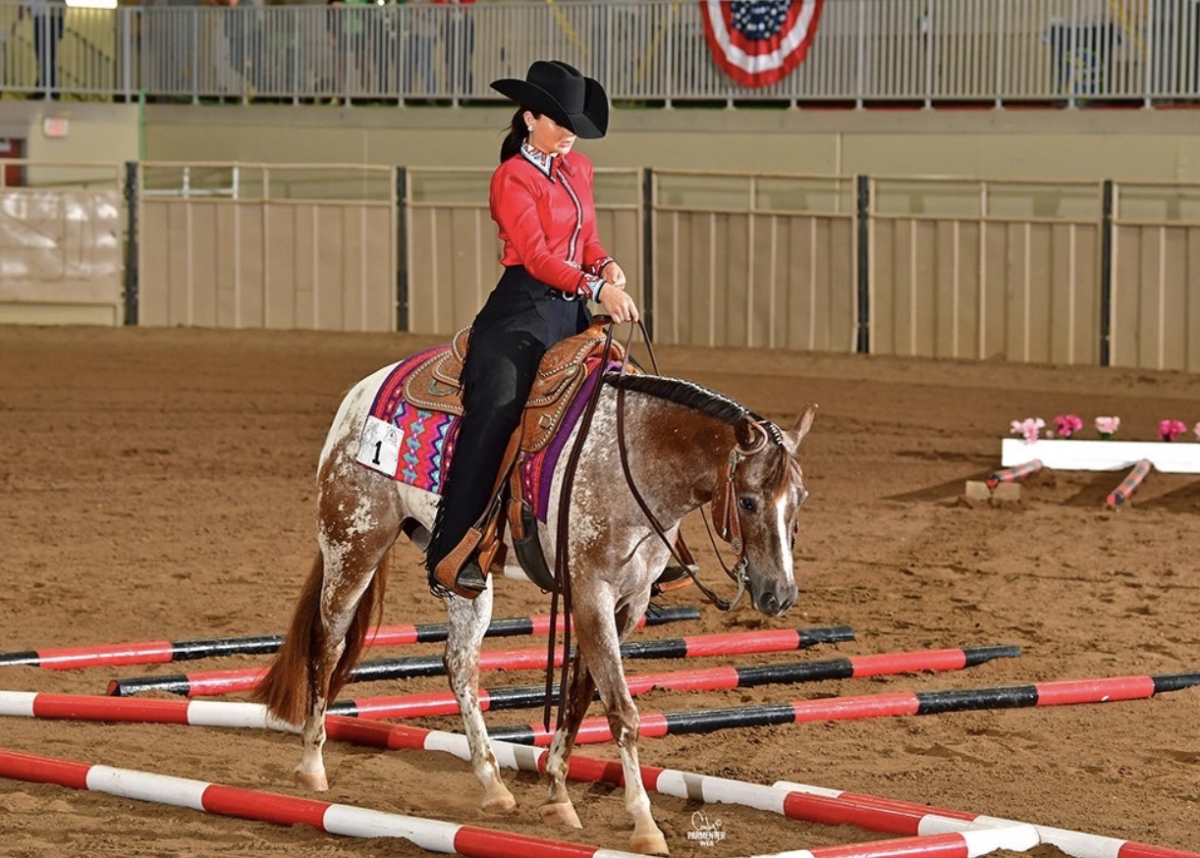
Growing up, junior Madeline Armstrong was no stranger to showing horses. Her family owns a farm which is home to her two horses Obi and Pete. As Armstrong puts it, showing horses is in her blood.
“I have always been passionate about horses. They’ve always been normal to me, and I’ve enjoyed learning more about them,” Armstrong said. “I love being around them and have grown up doing all the chores and work for them.”
The show season runs from April to May, and for Armstrong, this consists of daily chores, riding and working with the horses, along with shows on the weekends. When she performs in these competitive shows, Armstrong shows with almost every discipline.
“Showing horses can be different depending on the breed and discipline you show,” Armstrong said. “I show POAs, that’s the breed and I show them as “All Around” which means they do about every discipline.They’re a more universal breed that can do about everything from Western, English, Contesting, Halter (confirmation), Showmanship, Jumping, etc.”
When showing horses there are two different types of shows: weekend shows and national level shows. Whereas the weekend shows are simple to prepare for and rarely last beyond two days, national level shows require significant preparation in addition to being more lengthy, lasting up to four or more days on average. Armstrong shows horses on the national level, which impacts her schedule toward the end of the school year.
“I show nationally so there is a lot of traveling involved. So hauling into whatever location the show is at, unloading and unpacking and organizing your space for the show, practicing, staying the night, showing,” Armstrong said. “It has a structured schedule that you sign up for classes depending on your discipline, sometimes the age of the horse, or my age.”
Although showing horses may seem different than more traditional school sports, there are many similarities. Equestrian sports can be hard on the body and require extensive conditioning, and equipment can be very expensive.
“It’s very late nights and early mornings and a lot of full body activity that can really wear you down,” Armstrong said. “It’s also very expensive to do and a lot of work to keep the horses healthy and prevent any issues or injury.”
Over the long years of showing, Armstrong said she’s learned some valuable lessons along with disciplines such as animal science and veterinary medicine, which have helped her learn more about animals and herself.
“I’ve learned a lot about animal psychology and just the way that they think, which is very important to know when it comes to training animals. You have to understand them and basically how to communicate using just your body language,” Armstrong said. “I grew up always traveling so I think it made me very go with the flow of where I am and how to adapt. It made me very goal-oriented and made my own goals for myself and pushed myself to reach them.”
Along with her growing knowledge about animals, Armstrong has also made long-lasting connections through the various local and national competitions she’s competed in.
“I’ve made so many connections through showing that will last a lifetime,” Armstrong said. “Many of the girls and families I’m friends with I’ve been showing with since we were both little.”
Overall, showing horses plays a significant role in Armstrong’s life. Through years of competition, travel and daily responsibilities, she has gained experience, knowledge and connections within the horse showing community.