

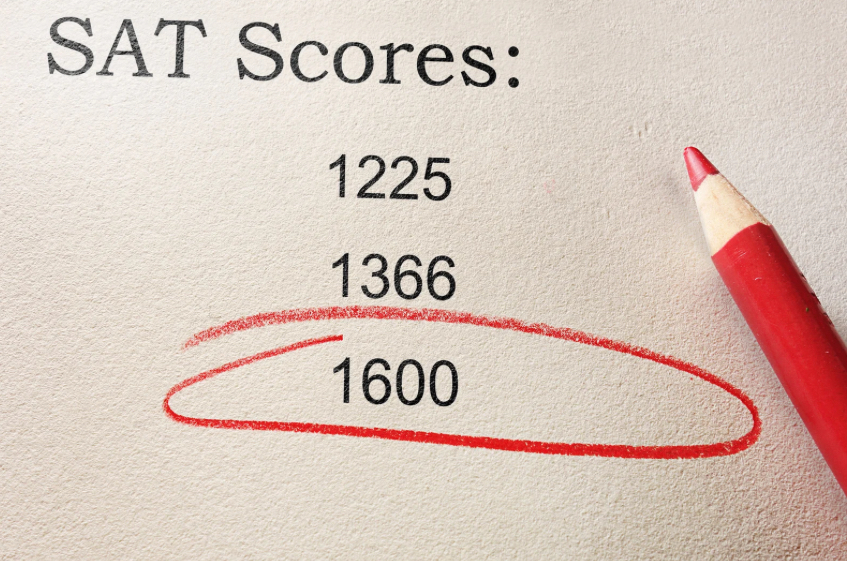
For Juniors, what is commonly thought to be the most stressful test of one’s high school career is right around the corner: the SAT. The majority of students acknowledge that this will be more than just any other standardized test we’ve taken in years past.
Whether it was NWEA in elementary school, or ISTEP during freshman year biology, the SAT has always been the “big, scary, future-determining” test we’ve had previewed to us over and over again. We are very much aware of the gravity our score can hold: college acceptance, scholarships, and academic-placement overall.
The pressure is intense for virtually every Junior across the country right now. However, it’s worth admitting that some of that pressure may be rising from a more personal place. I don’t think it would be much of a stretch to say that the most detrimental effect the SAT can have on a test-taker isn’t a bad score, it’s how it can make them view their self-worth.
Comparing your standardized test score to your peers is inevitable, and something that often starts at the elementary level. I have vivid memories of getting my test scores in the mail when I was younger and immediately asking what my friends got the next day. If I had a higher score than most of the people in my class, I would feel on top of the world. If I got a score lower than even one of my classmates, it hurt me on a deeper level.
Even at such a young age, I would have thoughts like “am I stupid?” or “why is this person smarter than me?” I thought that anyone with a higher score was simply “better” than me. That’s all that score seemed to tell: who is better than who.
Now, as juniors, we don’t need to imagine what this mounting pressure at a more serious level is like. We’re all feeling it. Our score is no longer just a tell of how much we know for our grade level. It will seemingly reveal our potential. It will settle who is “worth” the scholarship and who is “worth” getting into colleges with low acceptance rates.
As a teenager, not being a part of this group all because our score isn’t high enough can start to take a detrimental toll on our mental health. We can feel unworthy, yes, but we can also experience a lower self regard and even strong disappointment in ourselves—feeling like we could have done more or that we just are not smart enough to catch up to those who did. Some may even feel as though their future is ruined as they have relied on getting a good score.
Our score can feel like it determines everything about who we are, and that our status relative to our peers is all based on where we each fall in the range of 400-1600–each number representing a different slot. The higher the number, the higher on the pedestal of self-worth we put ourselves.
All in all, the point I’m trying to get at is not that we should relax and blow off the SAT. It’s still important and everyone should try their best. But it’s crucial to remind ourselves, however, that we are more than just a number.
Even if you worked hard to study and prepare and you don’t get the score you were hoping for, it’s worth noting that your score does NOT determine your future. Sure, a good score can help, but ultimately it does not accurately measure how “smart” you are or display your abilities.
There is so much more in life that will show those around you your true potential. Whether it’s how hard you work or just your character as a human being overall, we will look back on our high school selves and realize that thinking the SAT would decide our lives was ridiculous.




Richard Conrad • Mar 2, 2026 at 8:54 am
I agree! I would add that whether you go to college is also not an indicator of how ‘smart’ you are. Unless you are going into a STEM profession (science, technology, engineering, math, or medical), college has not proven to be beneficial enough to warrant the great debt that non-STEM students incur. Trade school and real job experience is often the better option. Many highly successful people have succeeded without a college degree (Steve Jobs, Steven Spielberg, F Scott Fitzgerald, Oprah Winfrey, Charlie Kirk, Frank Lloyd Wright, Henry Ford, Mark Zuckerberg, and many more).